
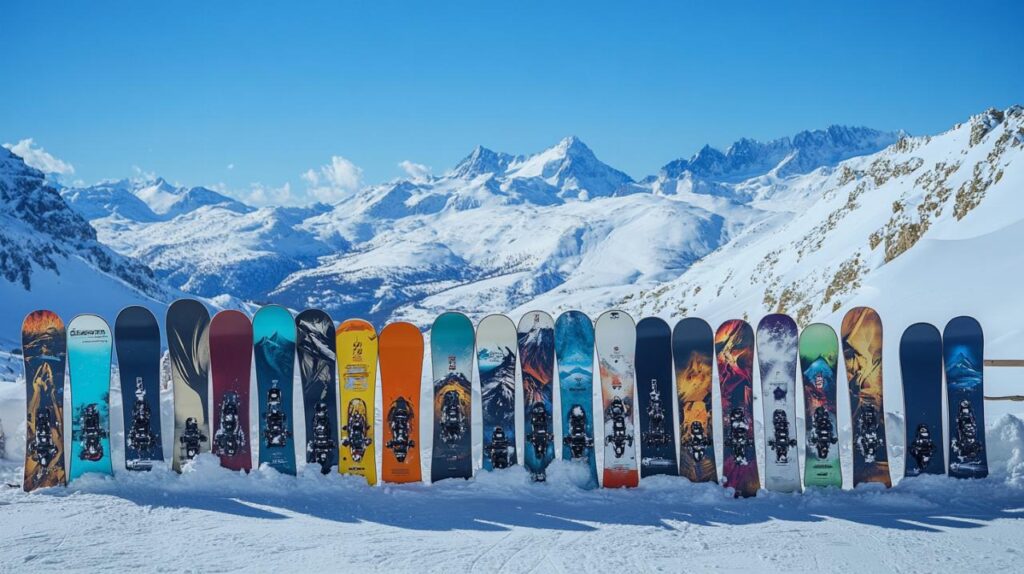
France has long been recognised as a powerhouse in winter sports, not only for its magnificent Alpine terrain but also for its remarkable contribution to snowboarding and skiing equipment manufacturing. The nation's snowboard industry has grown from humble beginnings into a sophisticated sector that combines centuries-old craftsmanship with cutting-edge technology. French manufacturers have carved out a significant position in the European market, offering everything from beginner-friendly all mountain boards to advanced freeride equipment designed for powder and off-piste adventures. These companies continue to innovate with sustainable materials, eco-friendly production methods, and designs that cater to freestyle enthusiasts, backcountry explorers, and everyone in between. As the demand for premium equipment grows across the continent, French brands are proving that their heritage of quality and innovation remains as relevant today as ever before.
The heritage and innovation behind France's top snowboard brands
Traditional craftsmanship meets modern technology in French manufacturing
French snowboard manufacturers have built their reputation on a foundation of meticulous craftsmanship that dates back generations. The same attention to detail that characterises French ski production, which began in earnest in the early twentieth century, now informs the creation of contemporary snowboards. Companies operating in the French Alps benefit from proximity to some of Europe's most challenging terrain, allowing designers and engineers to test their products in real-world conditions that demand precision and manoeuvrability. Modern French boards incorporate advanced materials such as carbon fibre, fibreglass, and bio-based resins, all whilst maintaining the handcrafted quality that distinguishes them from mass-produced alternatives. The use of sintered bases, which offer superior speed and performance compared to extruded bases, has become increasingly common among premium French manufacturers. This blend of traditional skills and high-tech materials results in boards that deliver exceptional energy transfer, whether you are carving on-piste or navigating deep powder in the backcountry. French companies have also embraced sustainable materials, with many using locally sourced wood and flax fibres to reduce their environmental impact. This commitment to eco-friendly manufacturing aligns with growing EU regulations and reflects a broader industry trend towards responsible production. For those looking to explore the full range of what French craftsmanship offers, you might want to visit mileniumonline.es for additional insights into European winter sports equipment. The integration of smart sensors and advanced binding systems, such as compatibility improvements for various stance configurations, demonstrates how French manufacturers continue to push the boundaries of what snowboard equipment can achieve.
How French companies shaped the evolution of snowboarding equipment
The evolution of snowboarding owes much to French innovation, particularly in the development of rocker design and freeride-specific equipment. French manufacturers were among the first to recognise that different board profiles could dramatically alter performance characteristics. The introduction of rocker technology, which features a reverse camber profile, revolutionised powder riding by allowing the nose of the board to float more easily in deep snow. This innovation made freeride and backcountry snowboarding more accessible to intermediate riders, not just advanced experts. French brands have also been instrumental in developing directional and tapered board shapes that enhance performance in specific conditions. A tapered board, which narrows towards the tail, helps the nose float in powder and improves overall control when riding forwards. Similarly, the adoption of swallowtail designs, which help the tail sink in deep snow, has become a hallmark of French freeride boards. Beyond board shapes and profiles, French companies have contributed to binding innovations that improve compatibility and allow for fine-tuning of stance width and angle. The focus on energy transfer through well-designed bindings ensures that riders can maximise the responsiveness of their boards, whether they are executing jumps in the park or navigating steep alpine descents. French manufacturers have also played a role in popularising splitboards, which split into two sections for uphill travel and are essential for ski touring enthusiasts. This versatility reflects a broader understanding of the diverse needs of snowboarders, from freestyle riders seeking twin tip boards for park and jumps to backcountry adventurers requiring robust freeride equipment.
Leading French snowboard manufacturers dominating the European market
Established brands setting industry standards across the continent
Among the established French manufacturers, Rossignol and Salomon stand out as industry titans with histories that span nearly a century. Rossignol, which began producing skis in France in 1907, has leveraged its extensive experience to create snowboards that meet the highest standards of performance and reliability. The company's boards are used by professional athletes and recreational riders alike, a testament to their versatility and quality. Rossignol offers a comprehensive range of snowboards, from beginner-friendly all mountain models to advanced freeride designs built for powder and off-piste conditions. Salomon, founded in France in 1947, made its mark by developing the first safety ski binding and has since expanded into snowboarding with equal success. The company's boards are renowned for their precision on hard snow, thanks in part to the use of camber profiles that provide excellent edge hold and control. Salomon also produces a range of bindings that are compatible with most boards, ensuring that riders can achieve optimal energy transfer and stance adjustment. Both Rossignol and Salomon have embraced modern manufacturing techniques, incorporating carbon fibre and other lightweight materials to enhance performance without sacrificing durability. These established brands have also invested in eco-friendly production methods, using sustainable materials and reducing waste in response to EU regulations and consumer demand. Their commitment to innovation is evident in the adoption of advanced board profiles, such as flat or zero camber designs that improve manoeuvrability, and the integration of technologies like magne traction for better grip on icy snow. For riders seeking reliable, high-performance equipment, Rossignol and Salomon remain benchmarks of quality in the European market.
Emerging French labels challenging conventional snowboard design
The French snowboard scene is not solely defined by its established giants; a new wave of emerging brands is challenging conventional design and pushing the boundaries of what snowboarding equipment can be. ZAG Skis, founded in 2003, is renowned for its freeride skis and pioneering rocker design, which has since been adapted for snowboards. The company's CEO, Eric Bascle, has expressed ambitions to expand into the United Kingdom, reflecting confidence in the brand's innovative approach. ZAG offers distinct product lines, including the SLAP series for backcountry freestyle, the UBAC range for ski touring, and the HARFANG collection for alpine carving. This diversification allows ZAG to cater to a wide spectrum of riders, from those seeking directional boards for on-piste precision to those requiring splitboards for backcountry exploration. Black Crows, founded in 2006 by Bruno Compagnet, Camille Jaccoux, and Christophe Villemin, has built a reputation for combining striking design with exceptional performance. Popular models such as the Corvus, Camox, and Atris have become favourites among freeride enthusiasts, and the brand has expanded its offerings to include clothing and protective gear. Black Crows embodies the motto of providing pleasure in every ride, a philosophy that resonates with both intermediate and advanced riders. RōNIN Skis, established in 2007 by Jonathan Jacobs, stands out for its handcrafted approach and commitment to sustainable materials. Using local wood, bio-based resins, and flax fibres, RōNIN produces limited-edition boards that appeal to environmentally conscious consumers. The company also offers workshops where enthusiasts can build their own boards, fostering a deeper connection between rider and equipment. Rabbit on the Roof, founded by Peter Steltzner, specialises in limited-edition freeride skis and snowboards that emphasise artisanal quality and unique design. These emerging labels are not merely following trends; they are setting new standards for what French snowboard manufacturers can achieve in terms of innovation, sustainability, and performance.