

The world of sim racing has grown remarkably over recent years, transforming from a niche hobby into a vibrant community of motorsport enthusiasts who demand authenticity and precision from their equipment. Whether you are taking your first steps into virtual motorsport or you are an experienced racer seeking to refine your setup, understanding how steering wheels, pedal sets, and racing rigs work together is essential. This comprehensive guide explores the compatibility of various sim racing components, helping you build a rig that delivers both performance and immersion across your favourite racing titles.
Understanding sim racing wheel compatibility: matching your hardware to your favourite racing titles
Choosing the right sim racing wheel involves more than simply picking a popular brand. Compatibility with your chosen platform and racing simulation software is paramount. Leading manufacturers such as Thrustmaster, Fanatec, and Logitech each offer distinct ecosystems, and while many wheels work seamlessly across multiple platforms, some are designed specifically for PlayStation, Xbox, or PC. For instance, the Fanatec Gran Turismo DD Pro is optimised for PlayStation users, ensuring full compatibility with Gran Turismo, while the Logitech G923 provides versatility across consoles and PC at a more accessible price point. When selecting sim racing hardware, it is crucial to verify that your steering wheel and pedal set are supported by the games you intend to play, whether that is Assetto Corsa, the latest F1 titles, or iRacing.
Platform and Game Compatibility Across Leading Brands: Thrustmaster, Fanatec, and Logitech
The landscape of sim racing equipment is dominated by a few key players, each with their own strengths and target audiences. Thrustmaster has built a reputation for offering reliable mid-range products that balance quality and affordability, making them a popular choice for both beginners and intermediate racers. Fanatec, on the other hand, appeals to those seeking high-end performance with advanced direct drive wheelbases and customisable components. Their ClubSport range, for example, offers exceptional feedback and build quality, though it comes at a premium price. Logitech remains a go-to option for newcomers, with models like the G923 providing a solid introduction to force feedback technology without breaking the bank. Compatibility across these brands generally depends on the wheelbase and the specific wheel rim, and many advanced users opt for wheelbases that support quick release mechanisms, allowing them to swap between formula-style and GT wheels depending on the race.
Why compatibility matters: ensuring seamless integration between steering wheels, pedal sets, and simulation software
The importance of compatibility extends beyond the physical connection between your wheel and console or PC. A well-integrated setup ensures that every component communicates effectively, delivering accurate force feedback, responsive braking, and precise throttle control. Mismatched hardware can lead to frustrating issues such as delayed inputs, inconsistent feedback, or even complete incompatibility with certain games. Pedal sets, in particular, play a vital role in achieving a realistic racing experience. High-quality pedals from brands like Heusinkveld or Fanatec CSL provide load cell braking, which mimics the pressure-based systems found in real race cars. When paired with a compatible wheelbase and steering wheel, these components create a cohesive system that enhances immersion and performance. Additionally, ensuring that your racing rig supports the mounting requirements of your chosen hardware is essential, as different wheels and pedals have specific spacing and alignment needs.
Essential Features and Technologies in Modern Sim Racing Wheels: From Feedback Systems to Quick Release Mechanisms
Modern sim racing wheels are packed with advanced features designed to replicate the sensations of driving a real race car. Understanding these technologies helps you make an informed decision when building or upgrading your setup. Force feedback systems, direct drive technology, and quick release mechanisms are among the most significant innovations, each contributing to a more authentic and flexible racing experience.
Force Feedback and Direct Drive Technology: Elevating Realism in Assetto Corsa and Gran Turismo
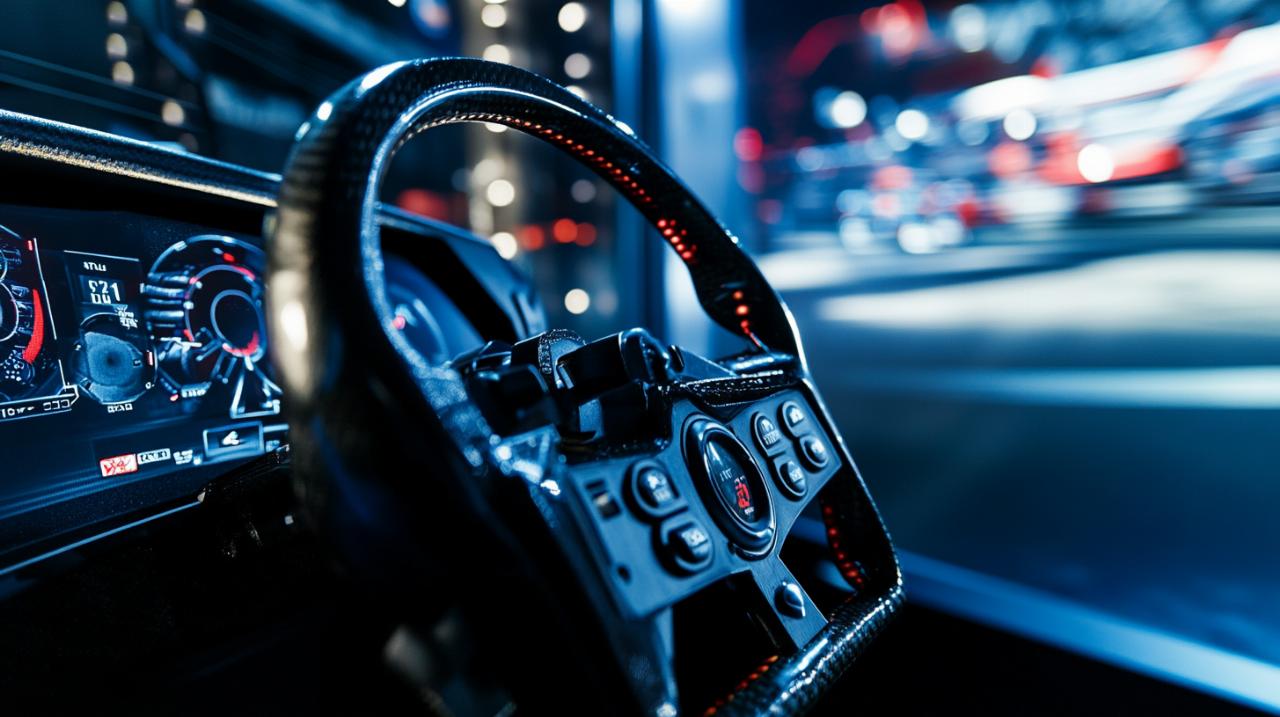
Force feedback is the cornerstone of immersive sim racing, providing tactile sensations that inform you about the car's behaviour, track conditions, and tyre grip. Traditional gear-driven or belt-driven wheelbases deliver feedback through motors that simulate resistance and vibration, but direct drive systems take this to another level. Direct drive wheelbases, such as those offered by Fanatec, Simucube, and MOZA Racing, eliminate the intermediary gears and belts, delivering unfiltered force feedback with remarkable precision and strength. The Fanatec ClubSport DD and the MOZA R5, for example, provide nuanced feedback that allows you to feel every kerb, gear change, and weight transfer with extraordinary clarity. This level of detail is particularly beneficial in simulators like Assetto Corsa and Gran Turismo, where subtle input adjustments can make the difference between staying on track and spinning out. For racers who prioritise realism, investing in direct drive technology is a significant step forward, though it does come at a higher cost compared to entry-level systems.
Quick Release Systems and Pedal Set Integration: Building a Complete and Flexible Racing Experience
Flexibility is a key consideration for enthusiasts who enjoy racing across different disciplines. Formula-style wheels, which are smaller and feature more buttons, suit open-wheel racing in titles like the F1 series, while GT wheels offer a wider steering range and are better suited to touring car or endurance racing. Quick release mechanisms allow you to swap between different wheel rims without the need for tools, making it easy to adapt your setup to the demands of each race. Brands such as Ascher Racing and Cube Controls specialise in high-quality rims designed for quick release compatibility, ensuring that you can customise your rig to match your racing style. Pedal sets are equally important, and advanced models from Heusinkveld or Fanatec offer adjustable pedal faces, hydraulic dampers, and load cell sensors that replicate the feel of real racing pedals. Integrating these components into a cohesive setup requires careful consideration of mounting options and spacing, but the result is a versatile and highly responsive racing rig that enhances both enjoyment and performance.
Choosing the Right Steering Wheel and Pedal Set for Your Budget and Experience Level: A Comprehensive Buying Guide
Building a sim racing setup involves balancing your budget, experience level, and performance expectations. Fortunately, there are excellent options available at every price point, from budget-friendly bundles for beginners to premium equipment for seasoned racers. Understanding what each category offers helps you make a choice that fits your needs without overspending or compromising on quality.
Best Options for Beginners: Affordable Entry-Level Wheels and Pedal Sets to Start Your Sim Racing Journey
For those new to sim racing, the priority is often to find a setup that provides a genuine racing experience without requiring a significant financial commitment. The Logitech G923 is a popular choice in this category, offering reliable force feedback, compatibility with major consoles and PC, and a bundled pedal set for around two hundred pounds when purchased used. This wheel provides a solid introduction to the fundamentals of sim racing and is widely supported across popular titles such as Gran Turismo, Forza Motorsport, and the F1 series. Another excellent option for beginners is the MOZA R5 bundle, which is priced at approximately three hundred and ninety-nine dollars and includes a direct drive wheelbase and a capable wheel rim. This setup represents a step up in quality and feedback precision compared to belt-driven systems, making it an ideal choice for racers who want to experience direct drive technology without venturing into the high-end market. Budget setups under four hundred pounds can also include the Playseat Challenge, a foldable racing seat that provides a stable platform for your wheel and pedals while being easy to store when not in use. These entry-level configurations offer a fantastic starting point, allowing you to develop your skills and determine whether you wish to invest further in more advanced equipment.
Premium Choices for Experienced Racers: High-End Equipment and the Evolution of Sim Racing Products
As your skills and commitment to sim racing grow, upgrading to high-end equipment can significantly enhance your performance and enjoyment. Premium wheelbases such as the Fanatec ClubSport DD and the Simucube products deliver exceptional force feedback strength and detail, while advanced wheel rims from Ascher Racing, Cube Controls, and Simagic offer superior build quality, featuring carbon fibre and aluminium construction. The Simagic GT NEO, for example, is noted for its budget-friendly positioning within the high-end market, combining impressive features and performance with a more accessible price compared to top-tier competitors. High-end setups often exceed one thousand pounds, but the investment is justified by the improved feedback, durability, and customisation options they provide. For formula-style racing, wheels such as the Ascher Racing McLaren Artura Pro and the Cube Controls F-Core offer compact designs with an abundance of buttons and rotary encoders, making them ideal for managing complex race strategies in F1 games. GT wheels, such as the Moza Vision GS, provide a wider steering range and a more traditional driving position, which is better suited to endurance racing and touring car competitions. Pedal sets also receive significant upgrades at this level, with the Heusinkveld Ultimate+ offering hydraulic dampers and load cell sensors that replicate the feel of real racing pedals with remarkable accuracy. The evolution of sim racing products has reached a point where the best equipment rivals the precision and feedback of professional racing simulators used by real-world drivers. Compatibility with different wheelbases is generally excellent, as most high-end wheels can be fitted with an appropriate adapter, ensuring that you can mix and match components to create a setup that perfectly suits your racing preferences. When selecting premium equipment, it is also worth considering factors such as grip quality, weight, and ease of access to controls, as these elements contribute to comfort and usability during long racing sessions. Building a high-end racing rig under four thousand pounds is entirely achievable, and many racers find that the investment transforms their virtual motorsport experience, providing the realism and immersion that make every race feel like the real thing.